


SoftGym guides
How to use a vibration plate: speeds, programs, minutes and moves
· 11 min read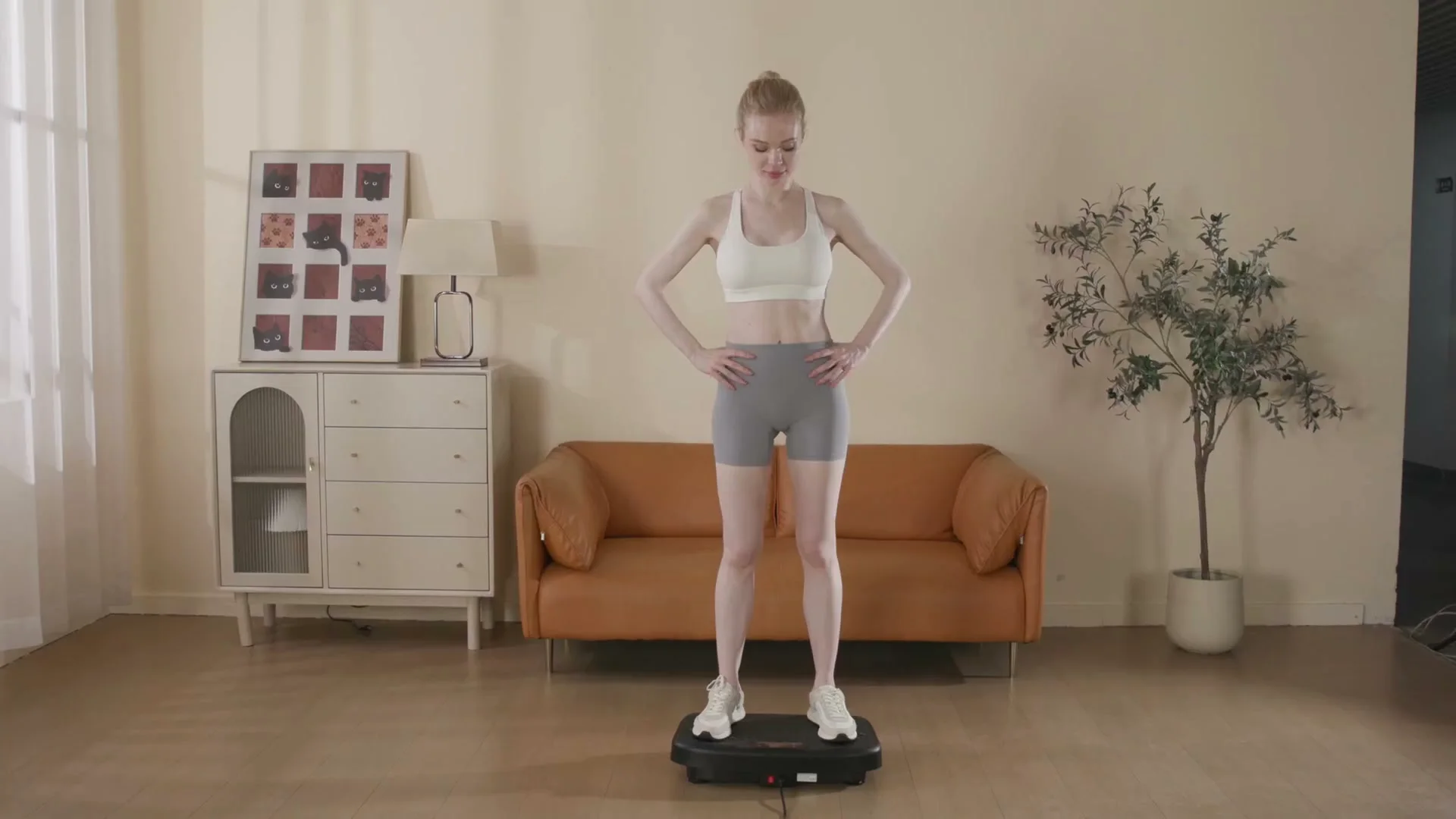
A vibration plate asks very little of you on the first day: stand on it, pick a speed and let your legs keep you steady. What matters is how much and how long. Short sessions at a low speed, a handful of moves you can hold well, and a plate that sits next to your walks rather than taking their place.
Set the plate up on a hard floor
Pick a spot on a hard, level floor with room on every side, so you can step on and off without twisting. The suction-cup feet under the deck grip tile, wood and laminate. Thick carpet gives them nothing to hold, though a thin mat over a hard floor works fine, and on a shared wall a thin rug also softens the hum of the motor. At about 21 by 13 inches and roughly 16 lb, the plate is light enough to pull out from under the sofa before each session.
Plug the cord into the side of the deck first, then switch the power on at the plate. Once the console lights up, the infrared remote takes over. Point it at the display on the console, not at your feet, and it answers from where you stand. Run the cord along the wall behind the plate so it never crosses the spot where you step down.
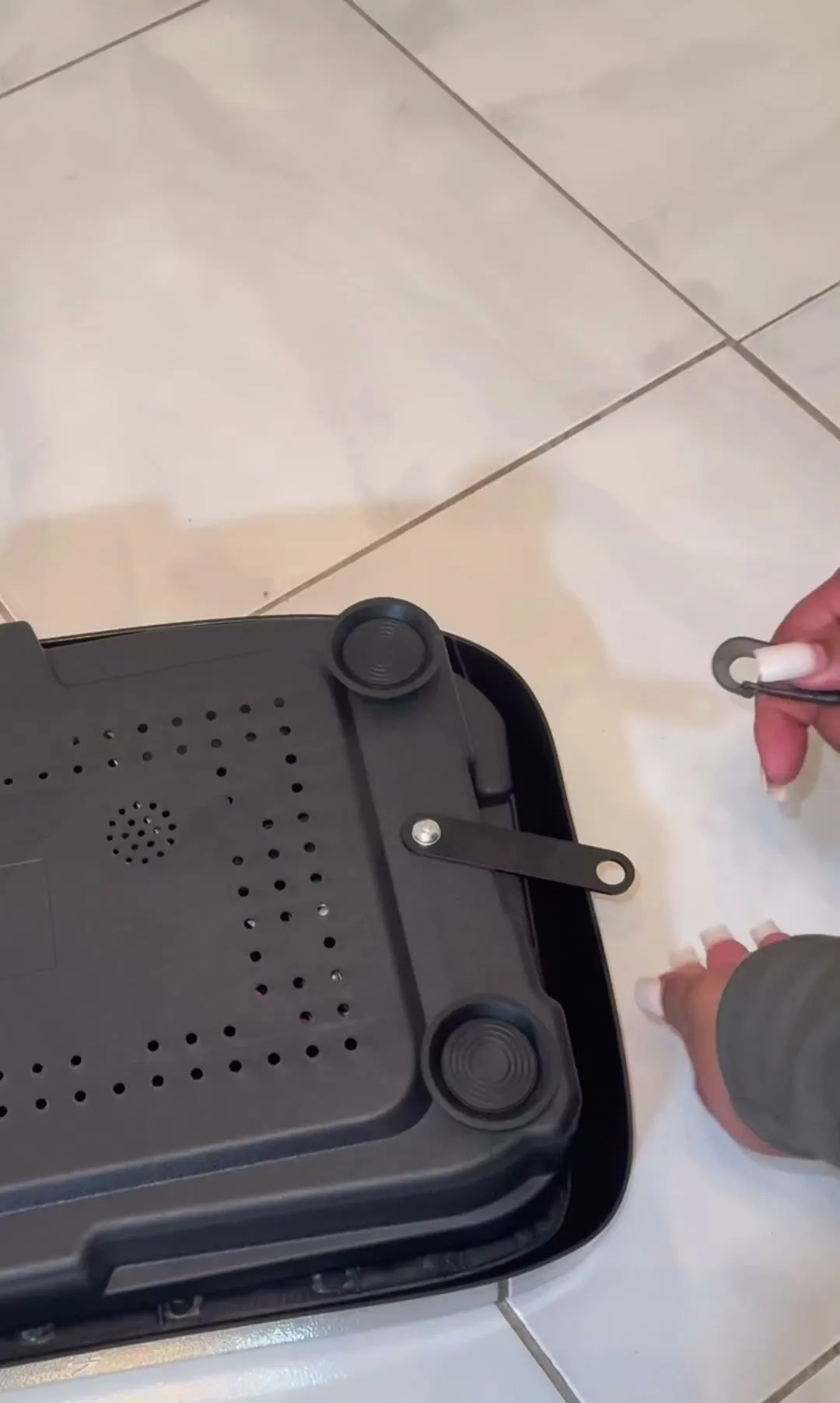
Lost the paper user guide, or never opened it? Every key on the remote, the shortcuts and the five programs are laid out on the SoftGym plate manual page.
Stand right before you press start
Your stance decides how the plate feels. Set your feet about shoulder-width apart on the footpads, bend your knees a little and let your weight rest over the middle of each foot. Try a few seconds with straight knees and then with soft ones, and the difference is obvious at once: soft knees keep the work in your thighs. Stand tall and look ahead at the room rather than down at the console.
OhioHealth, a hospital system in Ohio, explains what happens next. As you try to stabilize, your muscles contract and relax several times per second. That constant correcting is the exercise. Barefoot, the pattern of the footpad comes through more sharply than in sneakers, and both are fine, so start in whatever you would wear for a walk around the house.
The four speed zones, by hand or by program
Speeds run from 1 to 120, and the remote has shortcut keys that jump straight to 30, 60 and 90. Those three keys split the range into four zones, each one press apart. The plus and minus keys then move you one step at a time inside a zone.
| Zone | Speeds | What you feel | What to do there |
|---|---|---|---|
| Easy | 1 to 30 | A light hum through your feet and calves. You can talk and stand on one foot. | Your first sessions, warming up, standing during a phone call. |
| Steady | 31 to 60 | Your thighs start to buzz and you want soft knees. | Squat holds, calf raises, band rows with the plate running. |
| Strong | 61 to 90 | The whole body moves with the deck, and your core works to keep you upright. | Short holds of 30 to 60 seconds, then back down to Steady. |
| Top end | 91 to 120 | The deck moves fast and a squat hold takes real effort. | Brief bursts once the lower zones feel easy. Not in the first week. |
Running the plate by hand means every change is yours. Press the Program mode key instead and the display steps through P1 to P5, five automatic programs that change the speed by themselves while the timer counts down. Programs make sense once you know how each zone feels in your legs. In the first week, stay in manual so nothing surprises you halfway through a squat.
Set the timer before you start. It takes anything from 1 to 15 minutes, set on the console or the remote, and the display counts it down while you work.
How long a session should be
Start shorter than you think. Baylor Scott & White Health, a Texas hospital system, advises low intensity and short sessions of 5 to 10 minutes at the start. Research protocols are shorter still per move. A 2018 systematic review of 18 studies in PLoS ONE found that the exercise bouts lasted 30 to 60 seconds, usually squats and calf raises, about three sessions a week.
On the plate, the two numbers line up. A 5 minute timer holds four or five short bouts with rests between them, and you can stand quietly in the Easy zone during each rest. Over a first month, add a minute or two a week and stop at 10 minutes, which leaves the rest of the 15 minute timer for later.
| Week | Timer | Speeds | What the session holds |
|---|---|---|---|
| 1 | 5 minutes | Easy, 1 to 30 | Standing, a soft-knee squat hold, calf raises. Manual mode only. |
| 2 | 6 to 7 minutes | Easy and Steady | Squat holds of 30 seconds with 30 seconds of standing between them. |
| 3 | 8 minutes | Steady, 31 to 60 | Squats, calf raises, a plank with hands on the deck, band rows. |
| 4 | 10 minutes | Steady, short Strong holds | Holds of 30 to 60 seconds at 61 to 90, then back down. Try a program. |
Itching or buzzing in your legs after you step off is common. A 2022 trial in the Turkish Journal of Physical Medicine and Rehabilitation lists itching in the legs among the side effects of vibration exercise, and Baylor Scott & White describes the tingle as usually harmless and short-lived. If it lingers, shorten the next session or lower the speed.
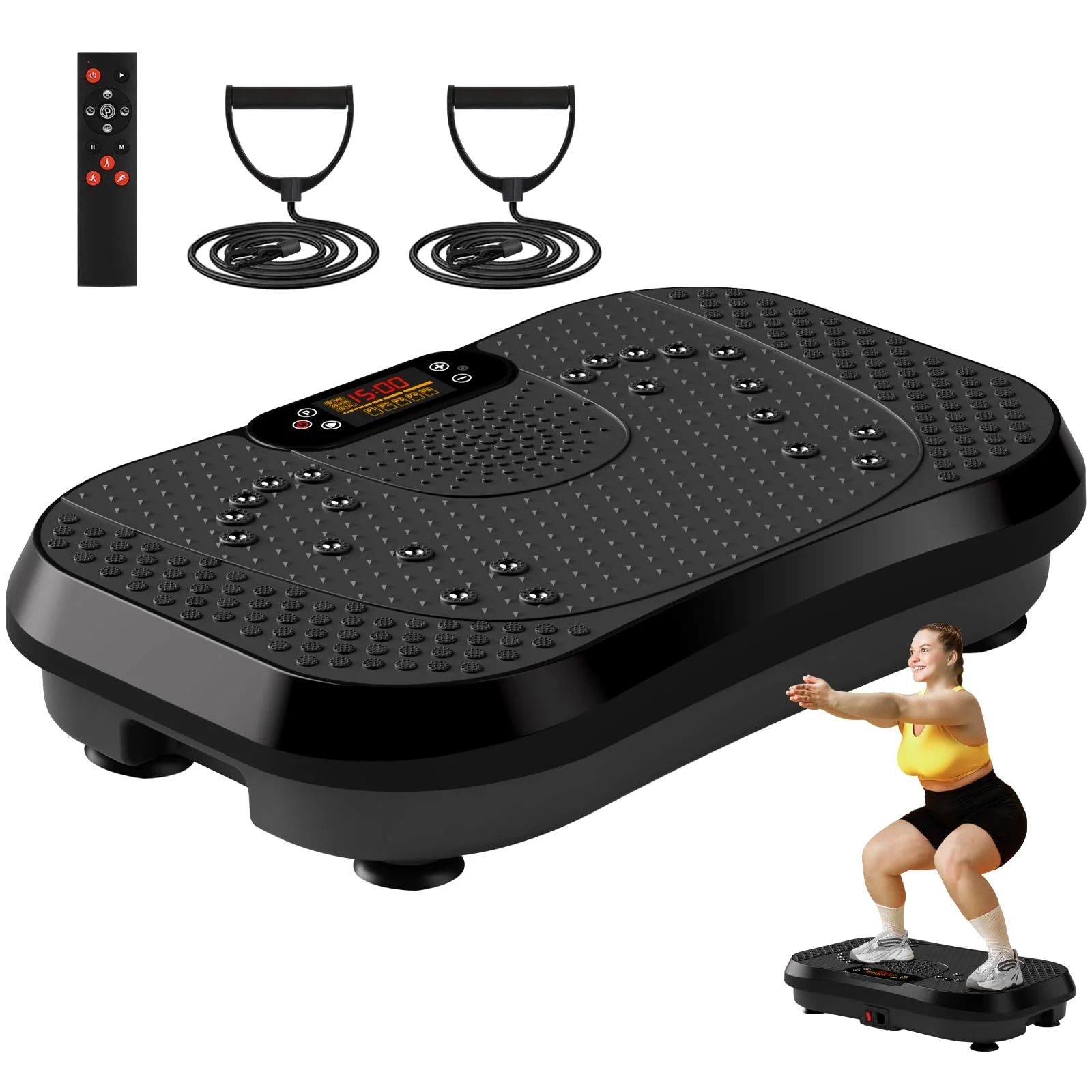
Eight moves to learn first
All eight work with the timer running. Learn them in this order, adding one or two a week, and hold each only as long as your form stays clean.
- Stand tall. Feet apart, knees soft, arms loose. It is the warm-up and the rest position between every other move.
- Squat hold. Sit back until your thighs feel the work, keep your chest up, and hold for 30 seconds before you stand.
- Calf raise. Rise onto the balls of your feet, lower slowly, repeat. The footpad pattern is most noticeable here.
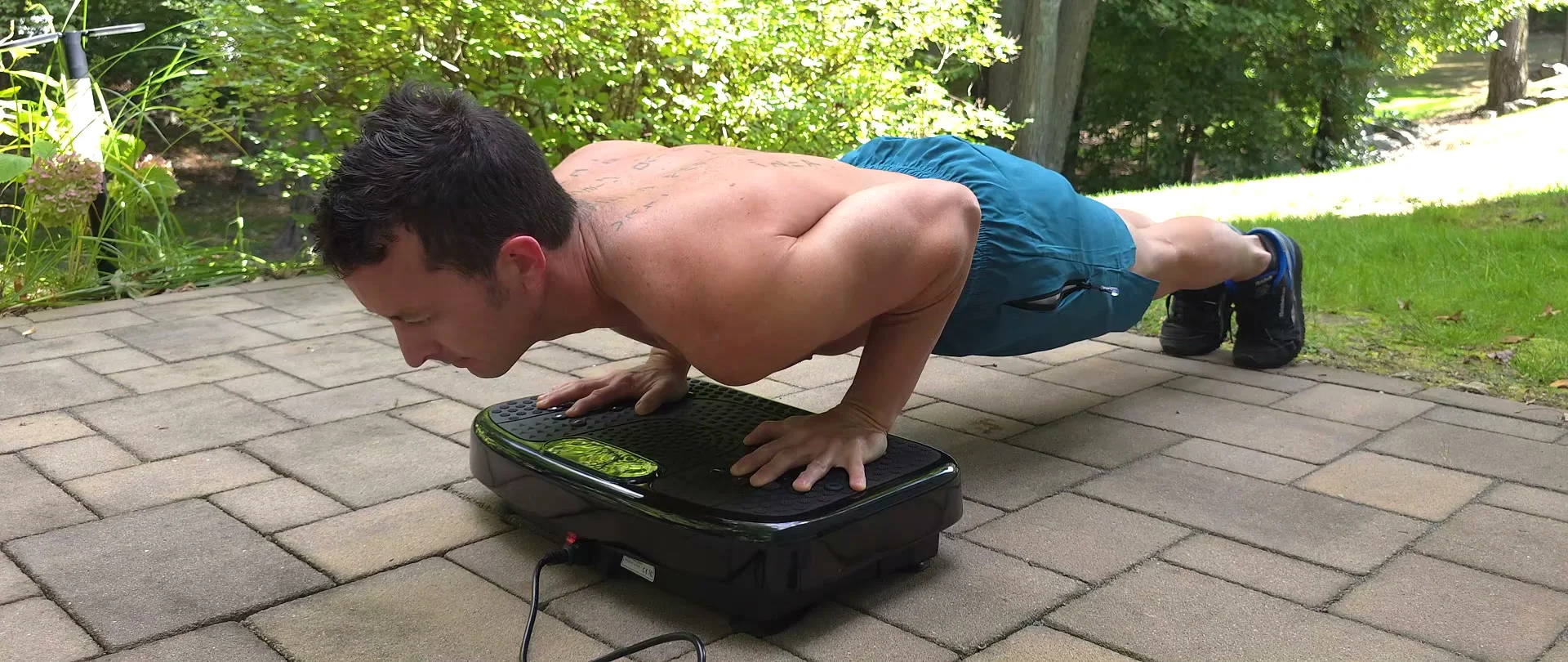
- Plank with hands on the deck. Feet on the floor, hands on the footpads, body in a straight line from heels to head.
- Push-up. Same position, lower your chest toward the plate and press back up. Drop your knees to the floor if the full version is too much.
- Lunge with the back foot on the plate. Front foot on the floor ahead of you, back foot on the deck, then lower straight down.
- Band row. Clip the handle bands under the plate, stand in a shallow squat and pull the handles toward your ribs.
- Band curl. Stand tall with the bands under the plate, elbows at your sides, and curl the handles toward your shoulders.
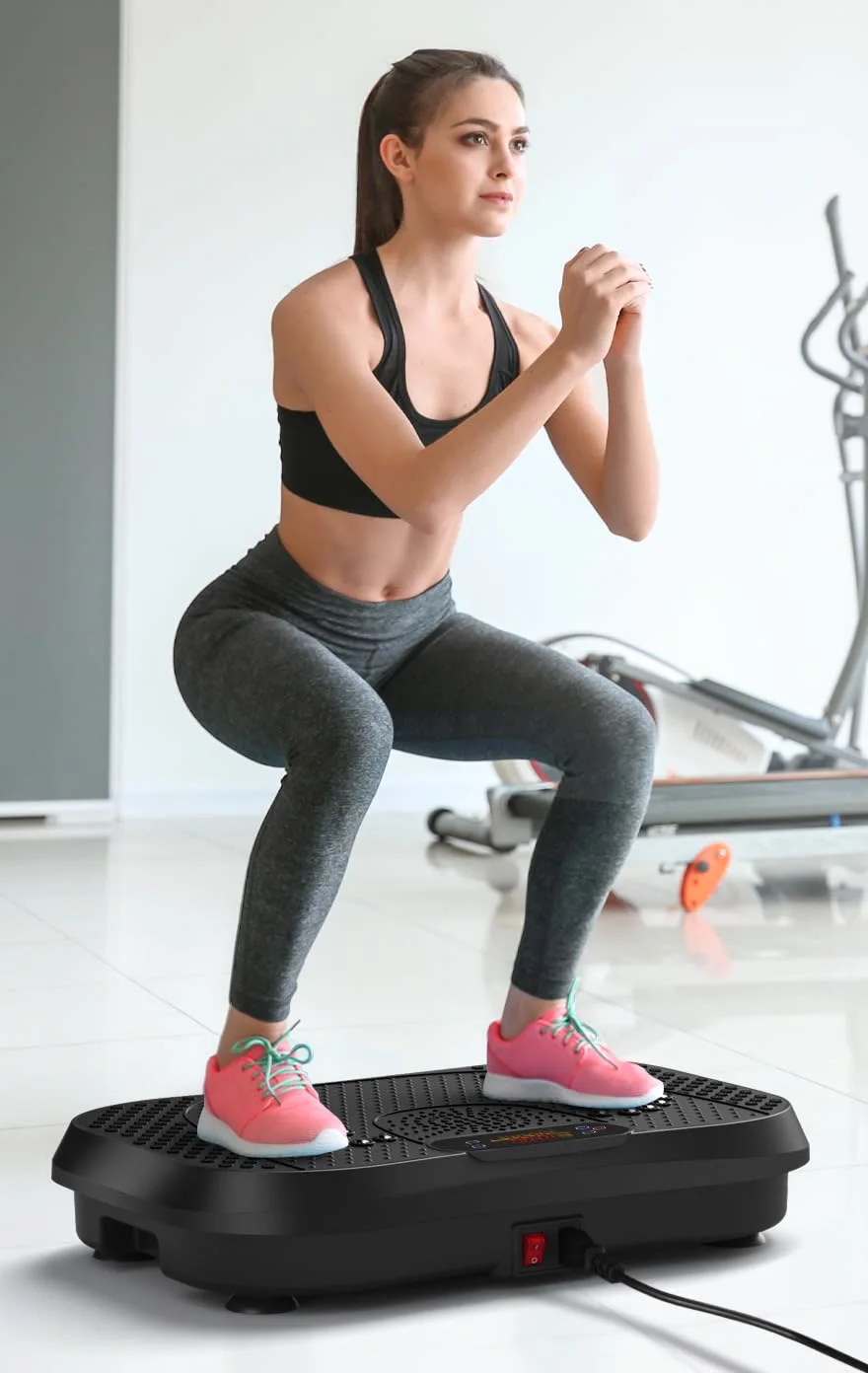
Black, Gray, White, Pink and Blue come with both handle bands and loop bands, the four ring and bead-row plates with the handle bands, and Midnight Bluetooth with five loop bands. Bands stretch out over time, and remotes go missing under cushions. The SoftGym bands and remote kit replaces both in one box, with two remotes, five loop bands, a handle set, a cord and a carry bag.
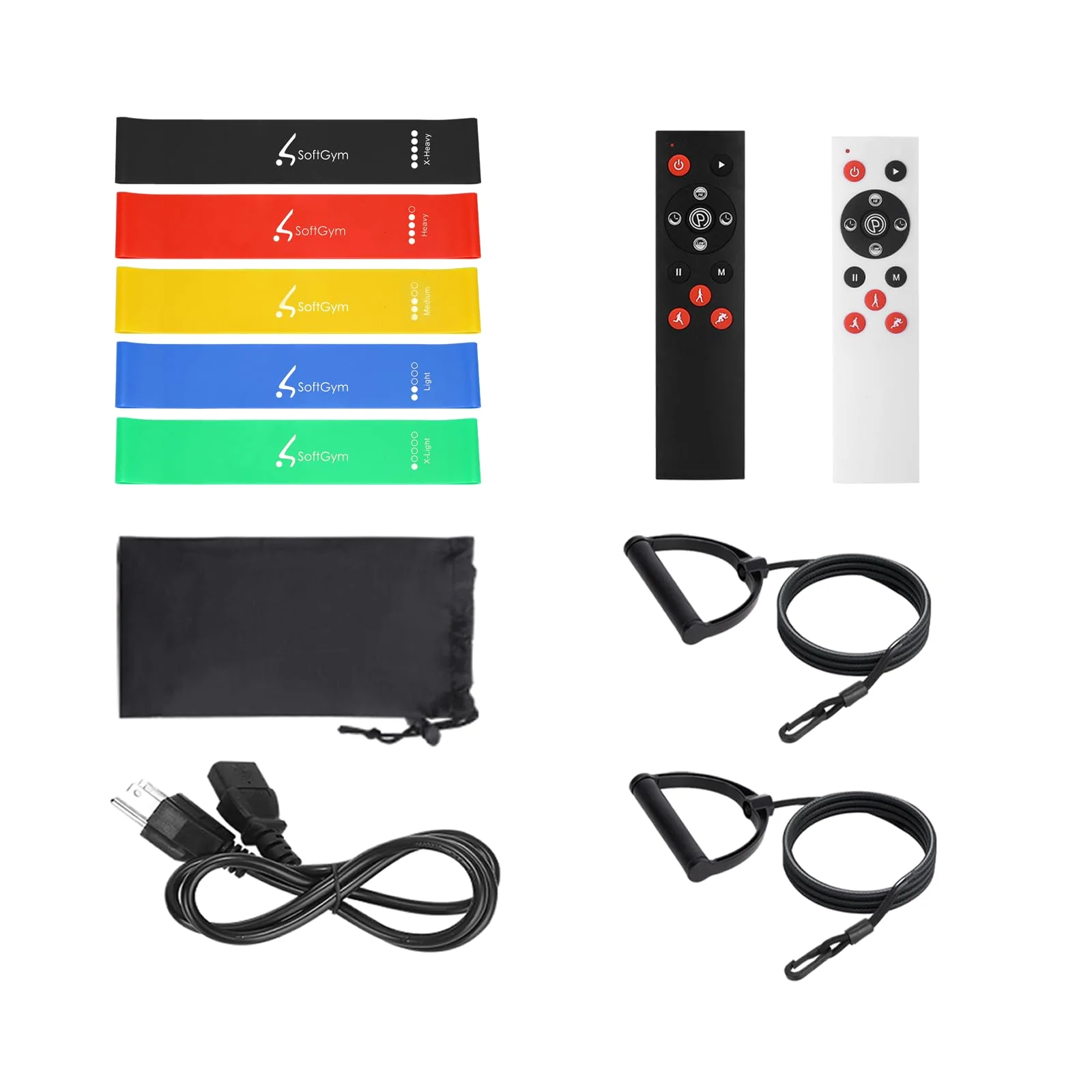
SoftGym Resistance Bands and Remote Kit
Loop bands, a handle set, two remotes, a cord and a bag.

Where the plate fits in your week
A plate is a short session, not a whole program. The federal Office of Disease Prevention and Health Promotion (ODPHP) sums up the Physical Activity Guidelines for Americans in a few lines. Adults need at least 150 to 300 minutes of moderate aerobic activity a week, such as brisk walking, plus muscle-strengthening activity on at least 2 days. Push-ups and band rows on the plate are the kind of muscle-strengthening work the guidelines name.
Baylor Scott & White puts the plate in the same place: a supplement to walking, strength training, Pilates or physical therapy, not a substitute for them. OhioHealth adds that aerobic and strength activities and a healthy diet still do the main work. Its point about steps is blunt: walking is still your best bet for step goals. The ODPHP list opens with a simpler rule for adults, move more and sit less, and that is where a plate under the sofa earns its spot. Stepping on it between calls gets you off the chair.
Owners who want a strength day away from the plate add a second tool from the SoftGym range, the Twister Arm, for chest and arm presses on a dial. If the speakers in the room matter to you, the ten plate colors include a Midnight model with Bluetooth in the console.
When to stop and step off
OhioHealth gives one stop rule that is worth keeping on a sticky note near the plate.
If you feel any pain or tension, especially in the lower back, you should stop the device.
OhioHealth
Dizziness and blurred vision belong on the same list. The 2022 trial in the Turkish Journal of Physical Medicine and Rehabilitation names both among the reported side effects, along with headache. Press the power key on the remote, step down onto the floor and sit for a minute before you decide whether to go on at a lower speed or call it a day.
Some people should talk to a doctor before the first session at all, including anyone who is pregnant, has a pacemaker or another implant, or had a recent surgery or fracture. The full list, with the source behind each condition, is in our vibration plate safety guide. And if your interest in the plate started with lymph, the guide to lymphatic drainage goes through what the research says and what it does not.
SoftGym products in this guide
-
SoftGym Vibration Plate
Vibration plate · 120 speeds
SoftGym Vibration Plate
Up to 450 lb, 120 speeds, a remote and bands in the box
- Regular price
- $69.99
-
SoftGym Resistance Bands and Remote Kit
Spares · bands and remotes
SoftGym Resistance Bands and Remote Kit
Loop bands, a handle set, two remotes, a cord and a bag
- Regular price
- $19.99
-
 GuidesMore SoftGym guidesSetup, safety and the research on platesAll guides
